November 18, 2026
How to reduce delivery van accidents: a 30-day plan
Most delivery van accidents come from a few repeat situations: backing, phones, following too close and rushing stops. A simple 30-day plan for last-mile fleets.
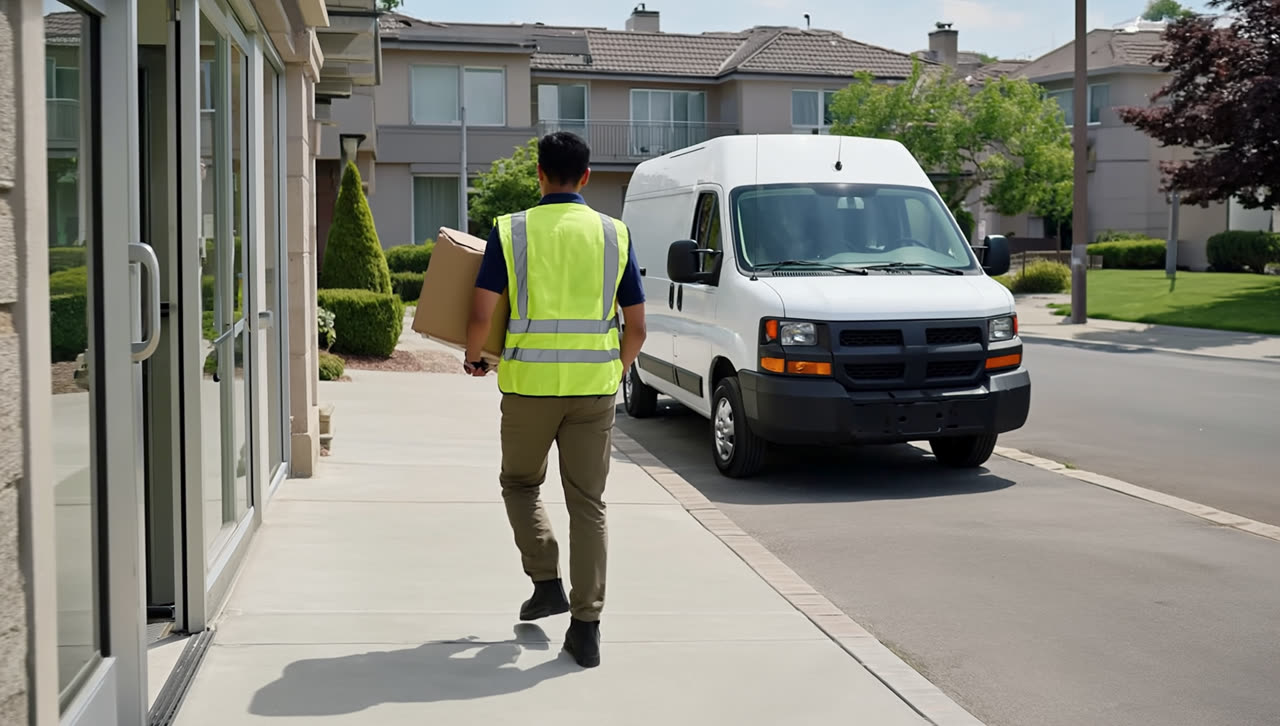
Delivery vans make hundreds of stops a week in driveways, alleys and busy streets. Most accidents come from the same few situations again and again. That is good news: a few habits, practiced every day, cover most of the risk.
Where delivery van accidents usually happen
- Backing out of driveways, alleys and parking lots.
- Looking at a phone, scanner or navigation screen while moving.
- Following too close in stop-and-go traffic.
- Rushing a stop: pulling out without checking mirrors and blind spots.
- Low branches, poles and overhangs that a cargo van is too tall for.
Week 1: know your numbers
- List every accident and near miss from the last 12 months, with the driver, place and type.
- Find your top 2 accident types. For most fleets, backing is one of them.
- Check who has not finished training, and who has had more than one accident.
Week 2: train the habits
- Assign Defensive Driving & Collision Prevention to every driver.
- Assign Distracted Driving to anyone with a phone or camera alert.
- Use the daily huddle before routes for one short tip, for example "pull through when you can".
Week 3: check it in the van
Drivers already know most rules. What changes behavior is someone watching them drive and scoring it. A short ride-along shows whether a driver really checks mirrors, keeps a safe following distance and puts the phone away before the van moves.
Week 4: coach and repeat
- After any accident or alert, coach the driver the same week and assign the matching retraining.
- Recognize drivers with clean weeks, not only the ones with problems.
- Keep every completion, score and coaching note dated, so you can show your safety program at renewal.
What to expect
Fewer accidents come from steady habits, not one training day. Track your own accident rate month by month. A safety program can't promise a lower premium or a set number of accidents prevented, but it gives you a clear record of what you did.
Related course
Defensive Driving & Collision Prevention
Proactive training to prevent the most common last-mile collisions before they happen.